
By Matthew Creely, UK Business Development Manager, DFM Doors UK
After twenty-five years in UK construction, doors and facades, I still get the same calls. A contractor has a doorset on site and the paperwork does not match the schedule. An architect has specified FD60 and building control wants the EN classification. None of it is unusual — it is a market partway through a transition, and these are the patterns worth knowing.
The most common steel fire door specification error is writing a fire resistance requirement as an FD rating alone, without the EN 13501-2 classification. The fix is simple: add the EN classification to every FD reference in the door schedule, confirm the Declaration of Performance carries it, and check the doorset is installed within its ETA field of application.
This is a practical column rather than a standards lecture. The aim is to pass on what actually comes up, in the order it tends to come up, so a specification holds together from schedule to handover without the late-stage scramble that so many projects go through.
The most common specification error I see
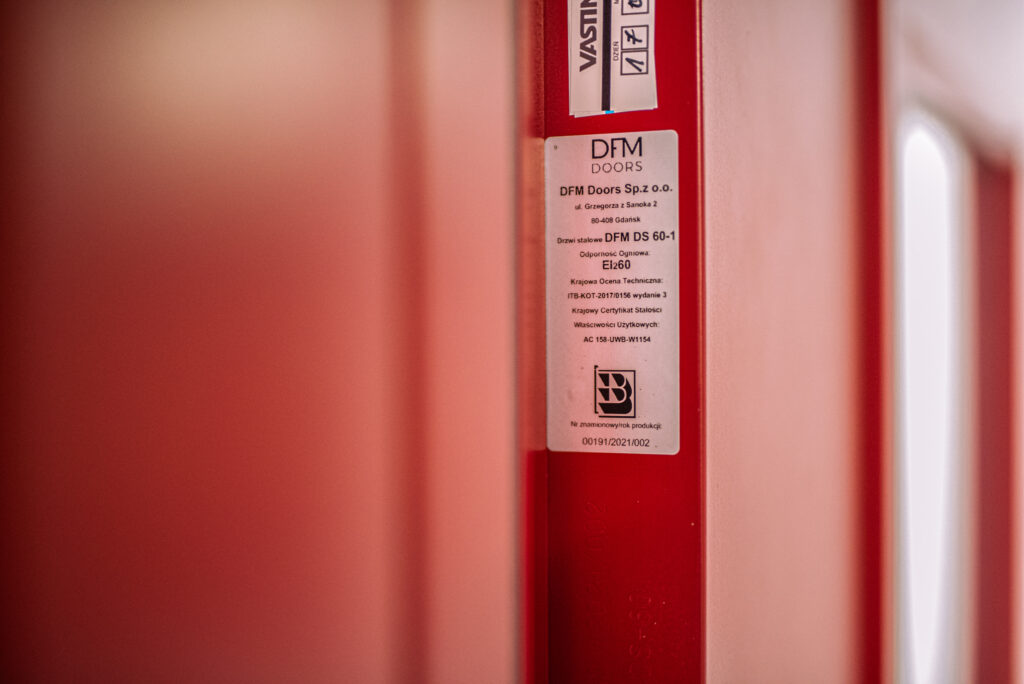
It is not complicated. The most frequent error is writing a fire resistance requirement as an FD rating without stating the EN classification. “FD60” tells a manufacturer roughly what is wanted, but it is not a current classification, and it does not say whether insulation is required. Building control and Gateway reviewers increasingly want the EN classification, and if it is not on the schedule, the question lands late — usually when the doors are already on site.
The fix is simple: add the EN classification to every FD reference in the door schedule. If you do not know which EN classification the fire strategy requires, that is the question to resolve at specification stage, not at practical completion. Writing EI₂ 60 next to FD60 removes the ambiguity entirely.
“FD60” tells a manufacturer roughly what you want. It does not tell building control whether you need insulation. Add the EN classification and the question never comes up late.
On evidence — what the Declaration of Performance actually tells you
The Declaration of Performance is the document I wish more people read before accepting a door. It is not marketing. It states the classification achieved, the harmonised standard it was assessed against, the notified body involved, and the manufacturer’s details. If a classification is claimed but the Declaration does not carry it, the claim is unsupported — and that is exactly the gap an inspector finds.
For DFM DS doorsets, the Declaration references ETA-22/0324, issued by OiB Vienna (Notified Body 1322). Behind it sits evidence from six independent European test institutes. When I am asked why that matters, the short answer is that evidence depth is what holds up when documentation is challenged — and on a Building Safety Act project, it will be.
The ETA field of application — where good doors go wrong
A correct doorset can still end up non-compliant if it is installed outside its ETA configuration. The European Technical Assessment defines the field of application — the sizes, frame types, hardware and configurations the classification covers. Install outside that, and the classification no longer describes what is in the wall, even though the door and its paperwork are genuine.
The example I give most often is gap fill on a DS 120: the structural perimeter gap must be filled with cement mortar or lime-cement mortar, not mineral wool. It sounds like a detail. It is the difference between a certified installation and an uncertified one. The installation record should capture the annex followed, the gap-fill material and the hardware — because that record is part of the handover package.
Three things to get right every time
- Classification in EN terms. Every schedule entry states the EN 13501-2 class, not an FD number alone.
- Evidence that matches. The Declaration of Performance carries the classification claimed, referencing the ETA.
- Installation within the ETA. Frame, hardware and gap fill match the annex, and the record proves it.
Get those three right and most of the calls I take would never need to be made. If you want a second pair of eyes on a schedule before it goes out, that is genuinely what the Technical Desk is for — reach me at matthew.creely@dfm-doors.com.
Frequently Asked Questions
What is the most common mistake when specifying steel fire doors?
Writing the fire resistance requirement as an FD rating alone, without the EN 13501-2 classification. FD60 is not a current classification and does not state whether insulation is required. Add the EN class (e.g. EI₂ 60) to every FD reference on the schedule.
What should a Declaration of Performance tell me?
It states the EN 13501-2 classification achieved, the harmonised standard assessed against (EN 16034 for fire doorsets), the notified body, and the manufacturer’s details. If a classification is claimed but not carried on the Declaration, it is unsupported. For DFM DS it references ETA-22/0324.
Can a correctly made fire door still be non-compliant?
Yes — if it is installed outside its ETA field of application. The ETA defines the sizes, frame types, hardware and configurations the classification covers. Installing outside that, such as using the wrong gap-fill material on a DS 120, takes the installation outside its certified scope.
What gap fill is required on a DS 120 doorset?
The structural perimeter gap on a DS 120 must be filled with cement mortar or lime-cement mortar only. Mineral wool is not approved for that application and using it takes the installation outside the ETA configuration. The installation record should confirm the material used.
How do I make sure a fire door specification holds up at Gateway?
State the EN classification on every schedule entry, confirm the Declaration of Performance carries that classification and references the ETA, and ensure installation stays within the ETA field of application with the record to prove it. Those three steps cover the points most often challenged.