There are openings where a door must do two demanding things at once: resist a determined intruder and resist a fire. Most ranges make you choose. A doorset that does both exists — but combining security and fire resistance in a single leaf comes with a rule it is essential to understand before you specify.
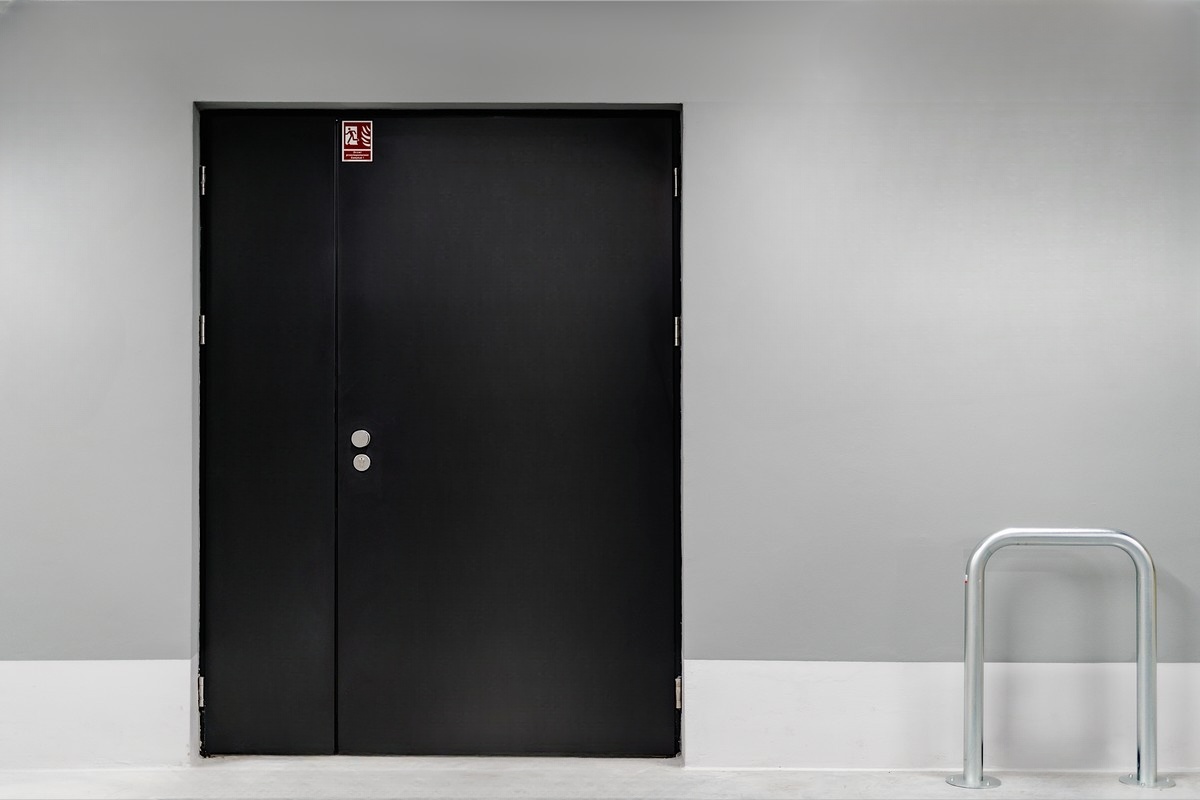
The DFM DS RC3 combines RC3 burglar resistance (EN 1627) with EI fire resistance classification (EN 13501-2) and Sa / S200 smoke control in a single steel doorset. The constraint to know: RC3 burglar resistance, a fire resistance classification, and a declared thermal U-value cannot all coexist in one DFM DS leaf. Specify the two that the opening actually requires.
Security and fire are usually treated as separate specification problems, served by separate doors. But some openings — plant rooms, substations, risers, secure stores in buildings that also need compartmentation — demand both at the same point. For those, a doorset certified for both avoids the compromise of choosing one risk over the other.
What RC3 means
RC3 is resistance class 3 under EN 1627, the European standard for the burglar resistance of pedestrian doorsets, windows and curtain walling. The classes run RC1 to RC6; RC3 represents resistance to an intruder who is determined and equipped with a second screwdriver, a crowbar and similar hand tools, attempting to force the doorset for a defined period. It is a common specification level for commercial security applications — secure enough to resist opportunist and semi-determined forced entry, without the extreme-threat requirements of RC4 and above.
Crucially, RC3 is a tested classification of the whole doorset, not a property of a lock. A good cylinder does not make a doorset RC3; the leaf, frame, hinges, hardware and fixings are tested together as an assembly, the same principle that governs fire classification.
What the fire classification covers
The DFM DS RC3 doorset carries an EI fire resistance classification under EN 13501-2 — integrity and insulation — alongside its security rating, with Sa / S200 smoke control available. This is the significant part: it is not a security door that happens to resist fire for a few minutes, nor a fire door with a better lock. Both performances are independently classified and evidenced on the same assembly. For the exact fire duration and configuration available, confirm the current specification with the technical desk, as the combined-rating leaf has its own defined limits.
RC3 is a tested classification of the whole doorset, not a property of the lock. A good cylinder does not make a door RC3 — the assembly does, exactly as with fire classification.
What cannot be combined in a single leaf
This is the rule that governs the specification, and getting it wrong wastes a schedule revision. Three declared values cannot all coexist in a single DFM DS leaf:
- RC3 burglar resistance (EN 1627)
- A fire resistance classification (EN 13501-2)
- A declared thermal U-value
Any two of these can be combined; all three cannot. The construction required to deliver RC3 and fire resistance together does not simultaneously carry a declared thermal transmittance. In practice this means an RC3 fire doorset is specified for internal security-and-fire applications, not as part of a thermally-rated external envelope. If an opening genuinely needs security, fire and a U-value at once, it needs a different solution — and that is a conversation to have before the schedule is fixed, not after.
When to specify RC3 + fire
The combined doorset earns its place wherever a single opening sits on both a security boundary and a fire compartment line. Typical cases:
- Plant and substation rooms — valuable or hazardous equipment behind a compartment wall.
- Risers and service cupboards — secure access that also maintains compartmentation.
- Secure stores and server rooms — where asset protection and fire separation coincide.
- Entrances to protected areas — controlled access on a fire-rated line.
In each case, specifying two separate doors — one secure, one fire-rated — is rarely practical at a single opening. The combined doorset resolves it, provided the thermal constraint above is understood and the opening is internal.
Specifying it correctly
State both classifications explicitly on the schedule: the RC class to EN 1627 and the EN 13501-2 fire classification, plus the smoke classification where the strategy requires it. Confirm the doorset’s Declaration of Performance and supporting evidence carry both ratings on the same assembly, and confirm the installation stays within the relevant field of application for each. Because the combined-rating leaf has defined limits on size and configuration, verify the specific opening with the technical desk before the schedule is issued — matthew.creely@dfm-doors.com.
Frequently Asked Questions
Can a single door be both fire-rated and RC3 security-rated?
Yes. The DFM DS RC3 doorset carries RC3 burglar resistance (EN 1627) and an EI fire resistance classification (EN 13501-2) on the same steel assembly, with Sa / S200 smoke control available. Both performances are independently tested and evidenced, not approximated.
What is RC3 in door security?
RC3 is resistance class 3 under EN 1627, representing resistance to a determined intruder using tools such as a second screwdriver and a crowbar for a defined period. It is a common commercial security level. RC3 is a classification of the whole tested doorset — leaf, frame, hardware and fixings — not just the lock.
Can RC3, fire resistance and a U-value be combined in one door?
No. In a single DFM DS leaf, RC3 burglar resistance, a fire resistance classification and a declared thermal U-value cannot all coexist. Any two can be combined, but not all three. An RC3 fire doorset is therefore specified for internal security-and-fire applications, not as a thermally-rated external door.
Where are RC3 fire doors typically used?
At openings that sit on both a security boundary and a fire compartment line — plant and substation rooms, risers and service cupboards, secure stores and server rooms, and entrances to protected areas. The combined doorset avoids having to fit two separate doors at one opening.
How do I specify an RC3 fire door correctly?
State both the RC class (EN 1627) and the EN 13501-2 fire classification on the schedule, plus smoke classification where required. Confirm the Declaration of Performance carries both ratings on the same assembly, and verify the specific opening size and configuration with the technical desk, as the combined-rating leaf has defined limits.